 2026.03.20
 Industry News
Content
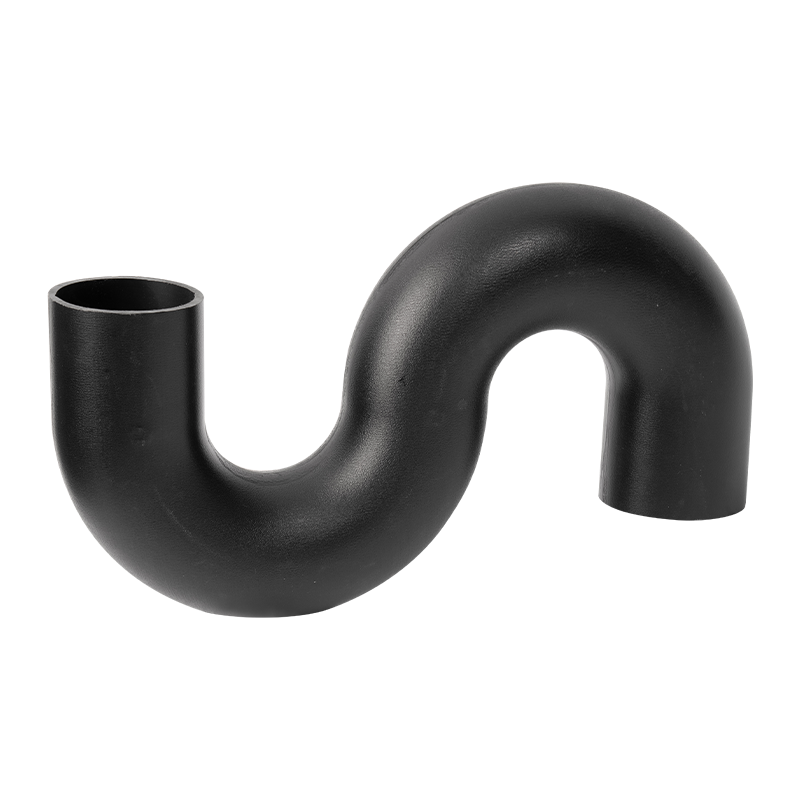
Neither is universally better — PE (HDPE) siphon drainage pipes outperform PVC in mechanical toughness, flexibility, impact resistance, service life, and suitability for large-scale or specialized drainage systems, while PVC pipes remain the more economical and easier-to-install choice for standard indoor gravity drainage, short runs, and retrofit applications. The key distinction is the drainage mechanism: PE siphon pipes exploit the siphon principle to achieve pressurized full-bore flow using only gravity and building height, enabling faster drainage with smaller pipe diameters than conventional gravity systems. PVC pipes rely on traditional gravity-slope drainage and do not inherently support siphon flow design. For high-rise building roof drainage, large-area municipal drainage, farmland irrigation integration, and systems requiring a service life exceeding 50 years, HDPE siphon pipes are the technically superior choice. For standard residential plumbing, below-ground sanitary drainage, and cost-sensitive projects, PVC remains the practical standard.
The defining advantage of a PE siphon drainage system is not the pipe material alone — it is the combination of HDPE pipe properties and a specifically engineered siphon drainage design that fundamentally changes how drainage works.
In a conventional gravity drainage system (including standard PVC installations), pipes are laid on a slope of typically 1–2% and water flows at partial fill — the pipe is never completely full, and air above the water surface limits flow velocity and capacity. In a siphon drainage system, specially designed roof drain outlets restrict air entry, allowing the downpipe to fill completely with water. Once full, the weight of the water column in the vertical drop section creates a negative pressure (vacuum) at the top of the system, and the potential energy of the building height drives water through the pipes at high velocity — typically 2–7 m/s compared to 0.6–1.5 m/s in conventional gravity drainage. This siphon effect means:
Standard PVC gravity drainage systems cannot replicate these characteristics. Their slope-dependent flow limits horizontal run flexibility, and their partial-fill design caps achievable flow velocity regardless of pipe length or drop height.
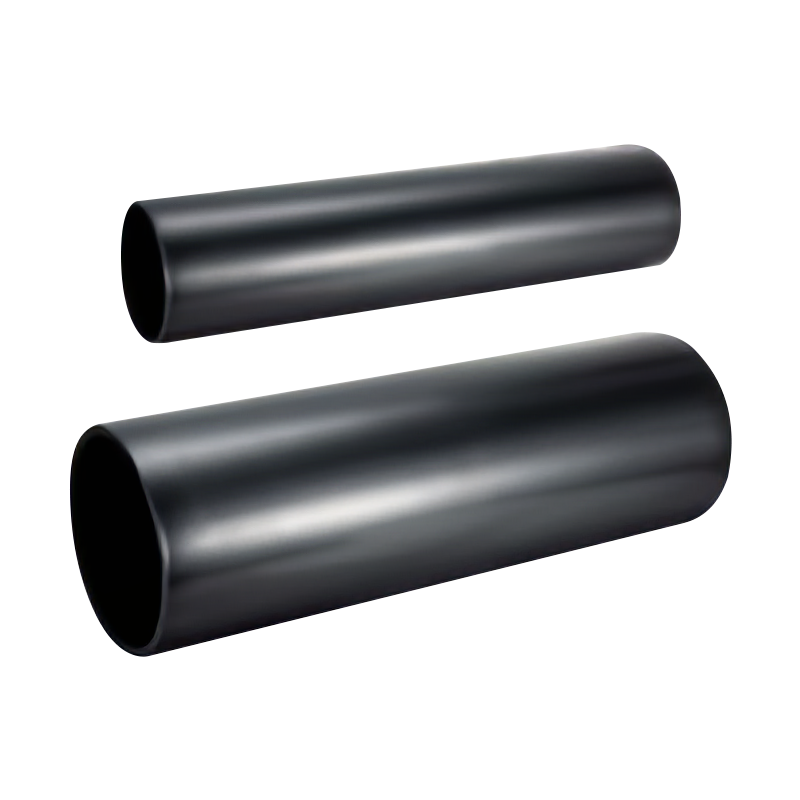
Even when comparing the two materials purely as pipes — setting aside the siphon system design — HDPE and PVC have measurably different physical properties that influence which is more appropriate for a given application.
| Property | HDPE (PE Siphon Pipe) | PVC Drainage Pipe |
|---|---|---|
| Tensile strength | 20–37 MPa | 40–60 MPa |
| Impact resistance | No break (highly ductile) | 2–5 kJ/m² (brittle at low temp) |
| Minimum service temperature | −50°C | 0°C (brittle below freezing) |
| Maximum service temperature | 60°C (continuous); 80°C (short-term) | 60–80°C |
| Flexibility | Flexible — cold bent on site | Rigid — fittings required for bends |
| Chemical resistance | Excellent — acids, alkalis, solvents | Good for domestic waste; limited for solvents |
| Service life | 50+ years | 25–50 years (varies by installation) |
| Density | 0.94–0.96 g/cm³ | 1.35–1.45 g/cm³ |
| Jointing method | Butt fusion, electrofusion, compression fittings | Solvent cement (fast, low-skill) |
| Material cost (relative) | Medium–High | Low–Medium |
Several application categories demonstrate why HDPE siphon pipes represent a genuine engineering advance over conventional PVC gravity drainage.
Buildings with large flat roof areas — warehouses, shopping centers, airports, industrial facilities — generate enormous peak drainage volumes during heavy rainfall. A conventional PVC gravity system handling these volumes requires very large diameter pipes and extensive horizontal collectors with carefully maintained slopes, consuming valuable building space and adding significant structural weight. A siphon system using HDPE pipes achieves equivalent or greater drainage capacity with fewer, smaller diameter pipes running level below the roof, dramatically reducing material cost, structural loading, and installation complexity.
In municipal stormwater systems and agricultural drainage networks where pipe runs extend hundreds or thousands of meters, the ability of HDPE siphon systems to run horizontal pipes at zero gradient eliminates the progressive depth increase that makes conventional gravity drainage expensive over long distances. Long agricultural drainage runs that would require excavation to 3–5 meters depth at their outlet end under conventional gravity design can be installed at near-constant shallow depth with a siphon system, reducing excavation volume and cost by 40–60% on long flat sites.
HDPE remains flexible and impact-resistant down to −50°C, making it the only appropriate plastic pipe material for drainage systems in cold climates where ground frost, freeze-thaw cycling, and impact from frozen soil are routine hazards. PVC becomes brittle below 0°C and is prone to cracking from minor impact during winter installation or from frost heave ground movement — a failure mode that does not occur with HDPE.
HDPE siphon drainage systems can be integrated with rainwater collection tanks, subsurface irrigation networks, ground source heat pump loops, aquaculture water systems, and negative pressure drainage systems — applications that require the pipe system to handle varied pressures, temperatures, and chemical compositions beyond the range of standard drainage PVC. This multifunctional capability is a specific advantage of HDPE siphon systems in integrated building services and agricultural infrastructure design.
Despite the technical advantages of HDPE siphon systems, PVC drainage pipes retain genuine practical advantages in several common application categories.
| Application | Recommended Pipe | Primary Reason |
|---|---|---|
| Large flat roof drainage (commercial / industrial) | HDPE siphon pipe | Smaller diameter; level horizontal runs; lower structural load |
| Municipal stormwater — long flat runs | HDPE siphon pipe | No excavation depth increase over distance; lower install cost |
| Agricultural drainage and irrigation integration | HDPE siphon pipe | Multi-system integration; 50+ year life; cold climate suitability |
| Cold climate ground drainage | HDPE pipe | Impact resistance to −50°C; no frost brittleness |
| Industrial chemical drainage | HDPE pipe | Superior resistance to acids, alkalis, solvents |
| Residential internal soil and waste drainage | PVC pipe | Simple installation; low cost; gravity adequate for short runs |
| Domestic roof drainage (sloped roof, small area) | PVC pipe | Conventional gravity adequate; lower system cost |
| Retrofit repair of existing gravity drainage | PVC pipe | Matches existing system; solvent joint; no specialist tools needed |
 General Manager Mr.Song +86-18868665013 / Miss Zhou +86-13757458992
 International Sales Manager: Jim Yao +86-18968349877
 +86-574-62939789
 Wechat/WhatsApp: +86-18968349877
 [email protected]; [email protected]
 No. 147 Dushan, Sanqi Town, Yuyao City, Zhejiang Province
Copyright © Ningbo Heqi Pipe Co., Ltd. All rights reserved. Wholesale Drainage Pipes Manufacturer Drainage Fittings Supplier



 EN
EN

 English
 中文简体
中文简体