 2026.03.27
 Industry News
Content
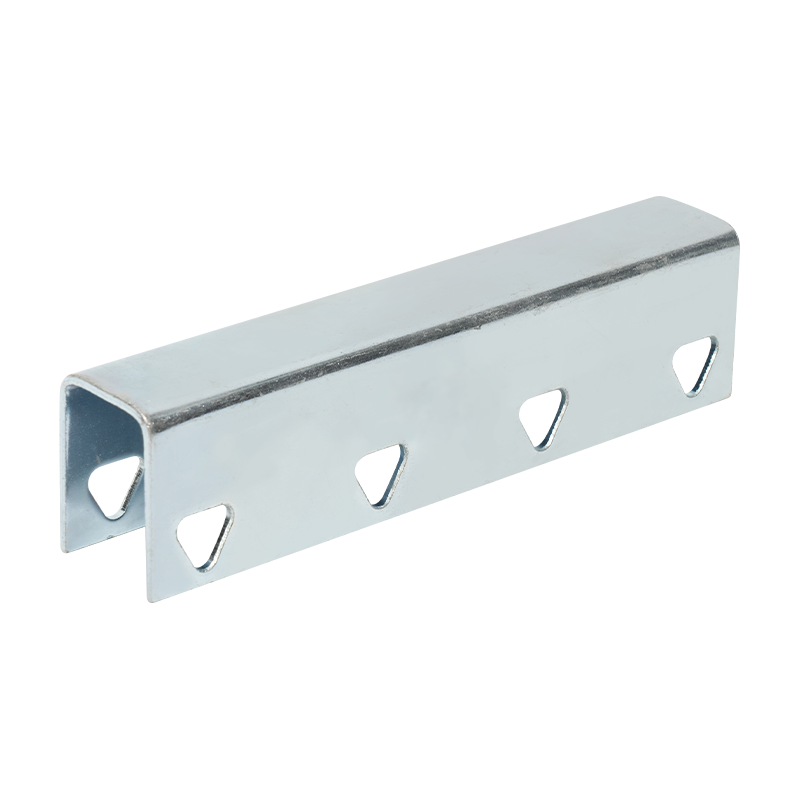
A square steel connector functions as a structural fastening component that joins steel beams, columns, tubes, and other structural members at a connection point, transferring loads between them while maintaining dimensional alignment and structural integrity. Its square cross-sectional geometry provides flat bearing faces on all four sides, enabling multi-directional load transfer and secure, non-rotating connections between structural elements. Made from high-grade steel with protective surface coatings, square steel connectors are designed to deliver reliable performance across decades of service in both indoor and exposed outdoor environments.
The primary function of a square steel connector is to create a mechanically sound joint between two or more structural steel members — a joint that must transfer the full range of loads acting on the structure without deforming, loosening, or failing across the structure's design life.
In steel frame construction, structural members are individual components that only perform their intended function when connected into a complete load path. A column can only carry vertical loads to the foundation if it is properly connected to the base plate and to the beams above. A beam can only span between supports if its end connections transfer the beam's reactions into the columns or walls on either side. The square steel connector is the element that completes these load paths — without it, the structure cannot function.
The square profile of the connector provides flat contact faces on four sides, which distributes bearing stress evenly across the connection interface and prevents the localized stress concentrations that occur with round or irregularly shaped connectors. This flat-face contact also ensures that bolted or welded connections engage the full cross-sectional area of the connector, maximizing joint efficiency.
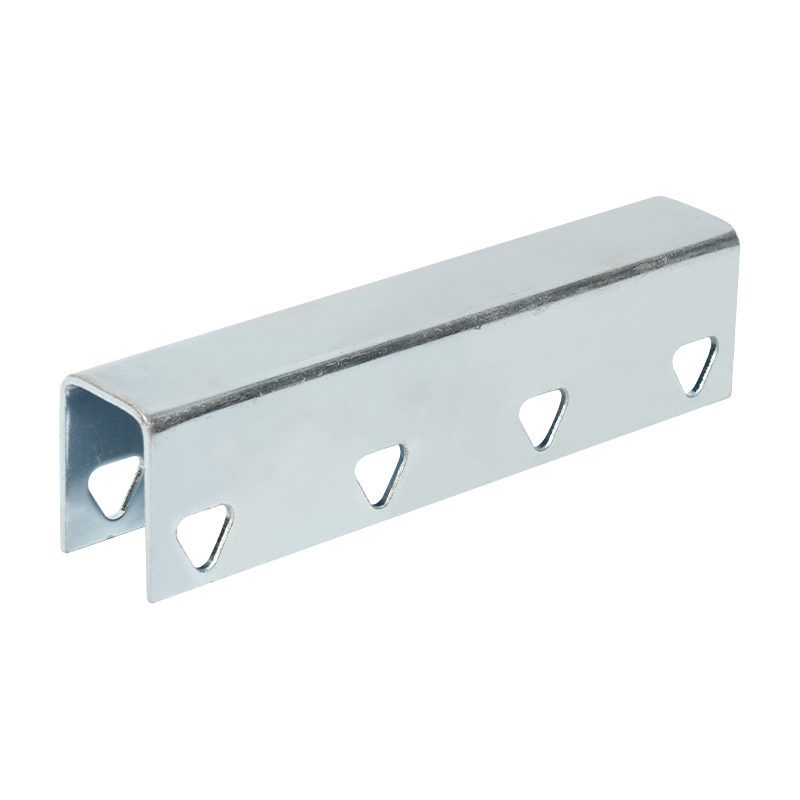
Structural connections in steel frameworks must handle multiple types of forces simultaneously, and square steel connectors are designed to transfer all of these effectively.
| Load Type | Description | Typical Source | How Square Connector Handles It |
|---|---|---|---|
| Axial compression | Force pushing members together along their axis | Column stack loads, gravity loads | Flat bearing faces distribute compressive stress evenly |
| Axial tension | Force pulling members apart along their axis | Wind uplift, tie rod loads, catenary forces | Bolted connections through connector body resist pullout |
| Shear force | Force acting perpendicular to member axis | Beam end reactions, horizontal loads | Square profile resists lateral sliding at joint faces |
| Bending moment | Rotational force tending to bend the joint | Eccentric loads, cantilever structures | Rigid welded or multi-bolt connections create moment resistance |
| Torsional force | Twisting force around the member axis | Offset loads, curved structures | Square geometry prevents rotation; four-face engagement locks torsion |
The square profile of these connectors is not merely an aesthetic choice — it delivers specific structural and practical advantages over round, oval, or irregular-section connectors that make it the preferred geometry for many structural applications.
The functional performance of a square steel connector depends fundamentally on the quality of its base material and the effectiveness of its surface protection — both of which determine whether the connector can sustain its design load capacity across the full intended service life of the structure.
High-grade structural steel is specified for square connectors in demanding applications. Common grades include:
The protective coating on a square steel connector is the primary defense against corrosion — the most common cause of premature structural connector failure in outdoor and wet environments. Several coating systems are used depending on the exposure conditions:
Square steel connectors are used across a wide range of construction, industrial, and infrastructure applications wherever steel structural members require secure, load-transferring joints.
Square steel connectors can be fixed to structural members using several connection methods, each suited to different load requirements, construction sequences, and reversibility needs.
High-strength structural bolts through pre-drilled holes in both the connector and the structural member create a clamped joint that transfers load through bolt shear and bearing. Bolted connections are the most common method for on-site assembly of structural steel — they require no specialist equipment, can be tightened to specified preloads, and are reversible for future modification or dismantling. Structural bolts are typically M16 to M30 diameter in commercial construction, tightened to proof load torques specified by the connection design.
Fillet welds or butt welds between the connector and the structural member create a rigid, permanent connection that can transfer bending moments as well as shear and axial forces — a structural capability that bolted connections alone cannot always achieve. Welded square steel connectors are typically fabricated off-site in a workshop under controlled conditions, with on-site welding used only where necessary. Weld sizes are designed to match or exceed the strength of the base material.
Some square steel connector designs are dimensioned to slide over or inside a square hollow section (SHS) tube, creating a telescoping joint that is then secured by bolts through the overlapping section. This slip-in method is widely used in modular construction systems, adjustable-height structures, and applications where the connection must be repositioned during installation before final fixing. The square profile prevents the inner section from rotating within the outer connector, maintaining positional accuracy.
Recommended Products
 General Manager Mr.Song +86-18868665013 / Miss Zhou +86-13757458992
 International Sales Manager: Jim Yao +86-18968349877
 +86-574-62939789
 Wechat/WhatsApp: +86-18968349877
 [email protected]; [email protected]
 No. 147 Dushan, Sanqi Town, Yuyao City, Zhejiang Province
Copyright © Ningbo Heqi Pipe Co., Ltd. All rights reserved. Wholesale Drainage Pipes Manufacturer Drainage Fittings Supplier



 EN
EN

 English
 中文简体
中文简体