 2026.04.10
 Industry News
Content
HDPE (High-Density Polyethylene) hot-melt fittings are technically a subset of PE fittings — not a competing category. "PE" is the broad material family (polyethylene), while HDPE refers to the specific high-density grade most widely used for pressure pipe systems. In practice, when professionals refer to PE hot-melt pipe fittings for water supply, gas, and industrial applications, they are almost always referring to PE80 or PE100 grade HDPE fittings. PE100 HDPE fittings are the superior choice for demanding pressure applications due to higher minimum required strength (MRS) ratings, better creep resistance, and longer certified service life. For non-pressure drainage or low-pressure irrigation, standard PE fittings in lower density grades may be sufficient and more cost-effective.
Polyethylene pipe fittings are classified by their Minimum Required Strength (MRS) at 20°C over 50 years, expressed in MPa. The most common grades used in hot-melt pipe fittings are:
| Grade | MRS Rating | Density | Typical Application |
|---|---|---|---|
| PE63 | 6.3 MPa | Low-medium | Low-pressure irrigation, drainage |
| PE80 (HDPE) | 8.0 MPa | High | Water supply, gas (medium pressure) |
| PE100 (HDPE) | 10.0 MPa | Very high | Municipal water, gas, industrial pressure lines |
| PE100-RC (HDPE) | 10.0 MPa + enhanced | Very high | Trenchless installation, rocky ground |
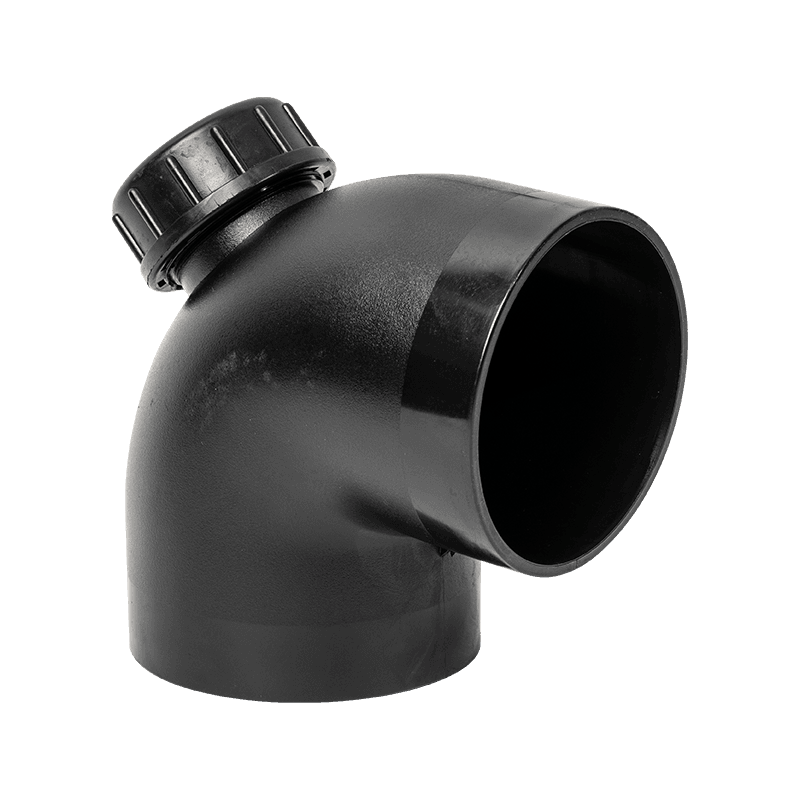
PE and HDPE hot-melt fittings use thermal fusion — not adhesives or mechanical fasteners — to create joints. Two primary methods are used:
The pipe and fitting end faces are heated simultaneously on a flat plate to the correct melt temperature (typically 200–230°C for PE100), then pressed together under controlled pressure and allowed to cool. This creates a monolithic joint with joint strength equal to or exceeding the pipe material. Butt fusion is the standard method for large-diameter pipes (≥63 mm) in municipal water, gas, and industrial applications.
The pipe end and fitting socket are simultaneously heated using a socket tool, then joined before the material re-solidifies. Socket fusion fittings — including straight couplers, elbows, tees, and reducers — are flexible in layout and well-suited for smaller diameter systems (typically ≤63 mm). They accommodate changes in pipe direction and are widely used in residential plumbing, agricultural irrigation, and light commercial installations.
| Property | Standard PE (PE63) | HDPE PE80 | HDPE PE100 |
|---|---|---|---|
| Pressure rating (SDR11) | Up to 11.5 bar | Up to 14.5 bar | Up to 18 bar |
| Wall thickness (same pressure) | Thicker required | Medium | Thinner (material saving) |
| Creep resistance | Moderate | Good | Excellent |
| Slow crack growth resistance | Lower | Good | Superior |
| Certified service life | 25–50 years | 50 years | 50+ years |
| Material cost | Lowest | Medium | Higher upfront, lower lifecycle |
PE100 HDPE fittings are the standard specification for urban water distribution networks. Their superior pressure rating, corrosion resistance, and certified 50-year service life make them the most cost-effective long-term choice despite higher upfront material costs. The system's corrosion resistance eliminates the costly pipe replacement cycles associated with iron or steel water mains.
Hot-melt butt fusion joints in PE80 or PE100 HDPE piping systems are the preferred connection method for buried gas distribution networks. The fusion joint creates a chemically homogeneous bond with zero permeability to gas — a safety-critical requirement that mechanical joints cannot reliably guarantee over decades of buried service.
In industrial environments handling cooling water, chemical effluent, and process waste streams, HDPE fittings' resistance to a wide range of acids, alkalis, and solvents makes them significantly more durable than metal alternatives. Their impact resistance also meets the demands of industrial installation environments where accidental mechanical loading is common.
For farmland irrigation systems, PE hot-melt socket fittings in PE80 grade offer an effective balance of cost and performance. Their UV resistance and corrosion immunity provide long service life in exposed agricultural environments without the annual maintenance costs of metal or PVC systems.
For hot and cold water supply within buildings, socket-fusion PE fittings offer easy installation, low maintenance, and compatibility with modern plumbing layouts. The absence of solvent welding agents eliminates chemical contamination risk in potable water systems.
Regardless of grade, PE hot-melt fittings share fundamental advantages over alternative pipe connection systems:
Recommended Products
 General Manager Mr.Song +86-18868665013 / Miss Zhou +86-13757458992
 International Sales Manager: Jim Yao +86-18968349877
 +86-574-62939789
 Wechat/WhatsApp: +86-18968349877
 [email protected]; [email protected]
 No. 147 Dushan, Sanqi Town, Yuyao City, Zhejiang Province
Copyright © Ningbo Heqi Pipe Co., Ltd. All rights reserved. Wholesale Drainage Pipes Manufacturer Drainage Fittings Supplier



 EN
EN

 English
 中文简体
中文简体