 2026.05.08
 Industry News
Content
Neither material is universally better—the right choice depends on the specific application, installation environment, and performance requirements. As a direct answer: HDPE siphon pipes are the superior choice for high-demand drainage systems, large-scale infrastructure, siphonic roof drainage, buried installations, and applications requiring long service life (50+ years) and high impact resistance. PVC pipes remain the more practical and cost-effective choice for standard gravity drainage, indoor plumbing, low-pressure systems, and short-to-medium term installations where upfront cost is a primary consideration.
The comparison is not simply one material versus another—it also involves a fundamental difference in drainage system design. HDPE siphon pipes are engineered specifically to work with the siphon principle, creating a pressurised, vacuum-assisted flow that moves water significantly faster and more efficiently than conventional gravity drainage. PVC pipes, by contrast, are designed for gravity-flow systems and do not support the same siphonic performance. Understanding this distinction is key to making the right specification decision.
Before comparing the two pipe materials directly, it is important to understand the fundamental difference in the drainage systems they are designed to serve, because this difference has a larger impact on system performance than material properties alone.
Standard gravity drainage systems—used with both PVC and standard HDPE pipes—rely on slope to move water. Pipes are installed at a gradient (typically 1% to 2% for horizontal runs) so that water flows downhill under the force of gravity. The pipes operate partially full, with air flowing above the water surface. This is a simple, reliable system, but its flow rate is limited by the gradient, pipe diameter, and the fact that only part of the pipe cross-section carries water at any given time.
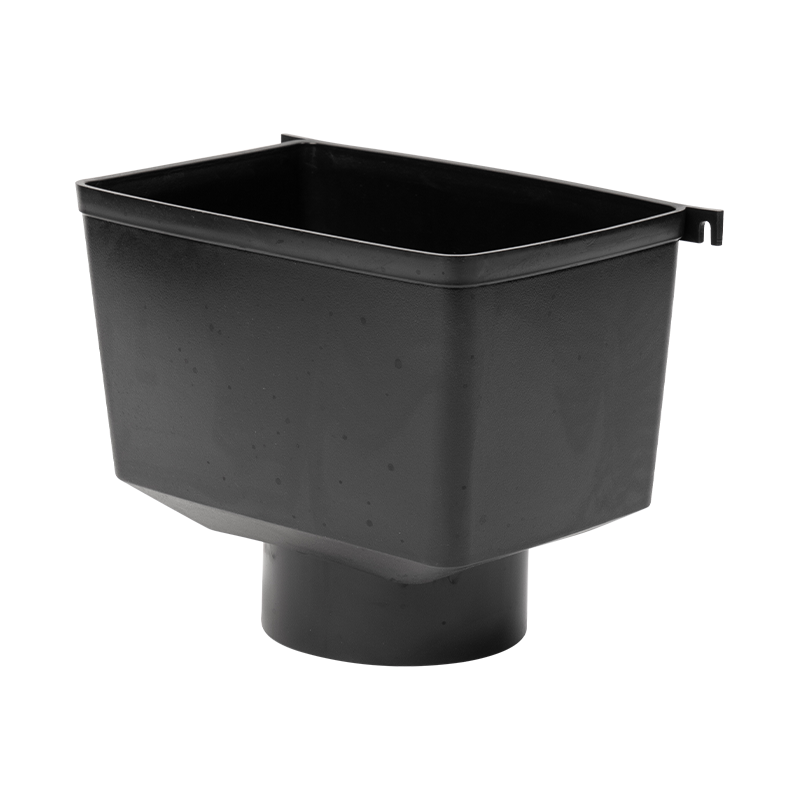
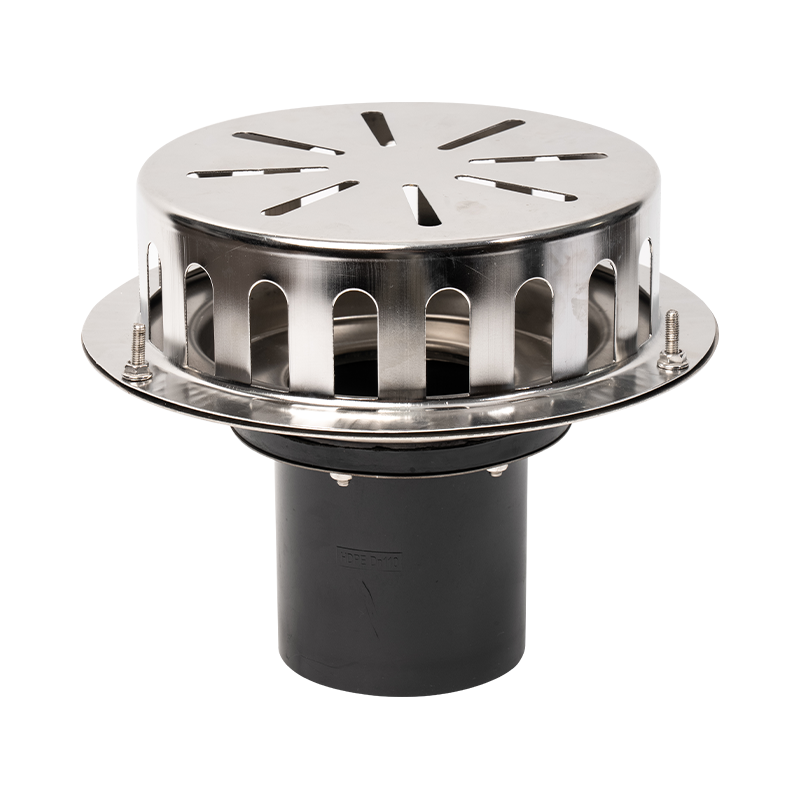
A siphon drainage system uses the height difference between the roof drain inlet and the discharge point to create a sustained vacuum (negative pressure) in the pipe. When the system is primed—when water fills the pipe completely and air is expelled—the entire pipe cross-section carries water under suction. This full-bore flow at negative pressure moves water 3 to 5 times faster than an equivalent gravity system and allows horizontal pipe runs to be installed with zero slope, dramatically simplifying pipe routing in large buildings. The vacuum is self-sustaining as long as rainfall maintains the water supply at the inlet. No pumps or external energy are required.
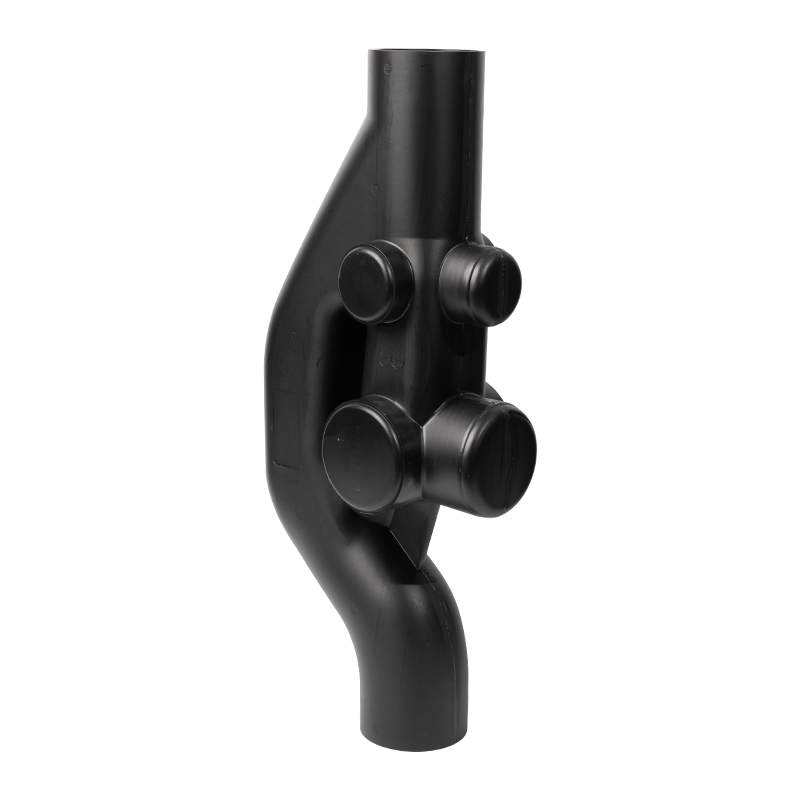
HDPE siphon drainage pipes are specifically engineered for this operating mode. The material must withstand the negative internal pressure (vacuum) without collapsing—a requirement that PVC pipes of standard wall thickness cannot reliably meet in larger diameters under sustained vacuum conditions.
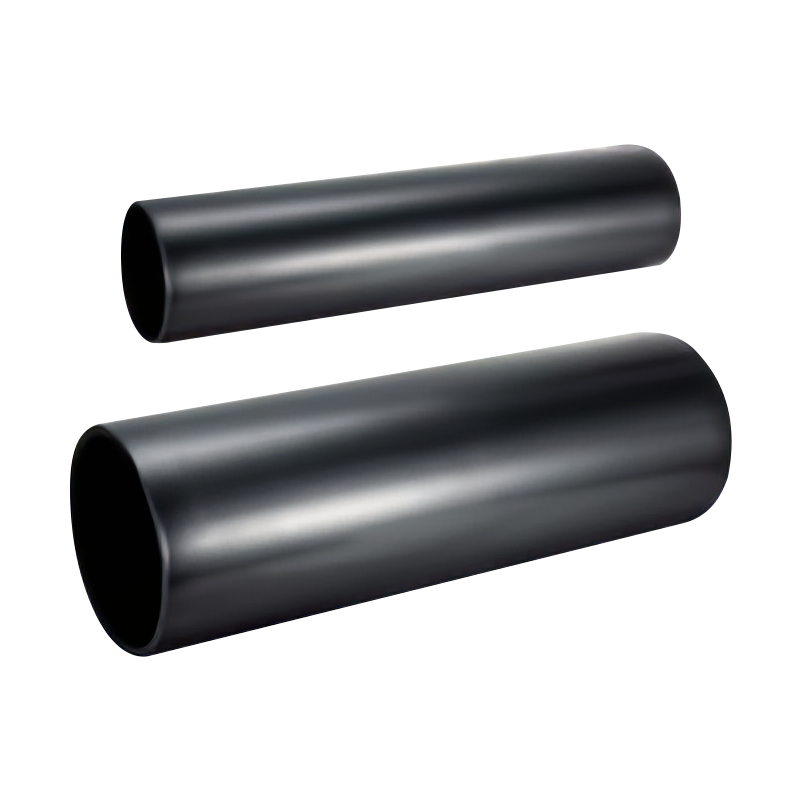
Setting aside the siphon system design for a moment, the material properties of HDPE and PVC differ significantly across several performance dimensions that affect pipe selection in any application.
| Property | HDPE Pipe | PVC Pipe | Advantage |
|---|---|---|---|
| Design service life | 50+ years | 25–40 years | HDPE |
| Impact resistance (low temperature) | Excellent (to -40°C) | Poor to moderate (brittle below 0°C) | HDPE |
| Flexibility / bending | High (can be bent in field) | Rigid (requires fittings for direction change) | HDPE |
| Vacuum / negative pressure resistance | Excellent | Limited (risk of collapse at larger diameters) | HDPE |
| Chemical resistance | Excellent (broad spectrum) | Good (limited with some solvents/acids) | HDPE |
| UV resistance (uncoated) | Moderate (requires UV-stabilised grade) | Poor (degrades rapidly without protection) | HDPE (slight) |
| Rigidity / dimensional stability | Moderate (some creep under load) | High (better for precise-slope gravity systems) | PVC |
| Ease of joining (field installation) | Heat fusion (butt/electrofusion) — requires equipment | Solvent cement — simple, fast, no equipment | PVC |
| Material cost (equivalent diameter) | Moderate–High | Low–Moderate | PVC |
| Weight (ease of handling) | Light | Light–Moderate | HDPE (slight) |
| Recyclability | Fully recyclable | Recyclable but more complex (chlorine content) | HDPE |
There are specific applications where HDPE siphon pipes offer advantages so significant that PVC is simply not a practical alternative. These are not marginal differences—they represent fundamental capability gaps.
For large commercial and industrial buildings—warehouses, airports, shopping centres, and factory roofs—siphonic drainage using HDPE pipes is the standard of choice. A siphonic system can drain a roof area of 10,000 m² or more through a single 110 mm pipe at peak flow, while an equivalent conventional gravity system would require multiple larger-diameter pipes with extensive sloped pipework. The zero-gradient horizontal runs of HDPE siphon systems simplify suspended ceiling installation, reduce structural penetrations, and significantly lower overall system cost on large projects despite the higher material cost per metre.
PVC pipes cannot be used in a true siphonic system at larger diameters because they lack the wall stiffness to resist collapse under the sustained vacuum pressures generated during full-flow siphonic operation. At diameters above 75 mm, PVC pipes in vacuum service require wall thickness upgrades that negate their cost advantage and may still be insufficient for high-vacuum siphonic conditions.
HDPE pipes are the dominant choice for buried drainage infrastructure—municipal stormwater systems, agricultural field drainage, and industrial drainage networks—for several reasons that directly relate to their material properties:
In environments where temperatures regularly fall below 0°C, PVC pipe's brittleness becomes a serious limitation. PVC loses impact strength rapidly below 0°C and can shatter under mechanical shock that HDPE would absorb without damage. HDPE maintains usable toughness down to -40°C (-40°F), making it the only practical choice for exposed or buried drainage systems in cold climates. Agricultural drainage in northern regions, mountain infrastructure, and cold-storage facility drainage are all applications where HDPE's cold-temperature performance is a decisive advantage.
HDPE's chemical resistance is broader than PVC's. While both materials resist dilute acids and alkalis, HDPE is more resistant to strong oxidising agents, concentrated acids, and certain solvents that attack PVC. For industrial drainage where the carried fluid may include process chemicals, cleaning agents, or agricultural chemicals, HDPE provides a more reliable long-term containment barrier. HDPE is also preferred for aquaculture, food processing, and pharmaceutical drainage where the inertness of the pipe material is critical to product safety.
Despite HDPE's material advantages in many performance categories, PVC remains the dominant pipe material globally for several application categories where its specific properties and economics make it the more sensible choice.
For standard residential and commercial building drainage—waste stacks, soil pipes, horizontal drain runs inside buildings—PVC remains the most widely used material because it is rigid (holding precise slopes without additional support), easy to cut and join with solvent cement, and available from every plumbing supplier worldwide. The temperature environment inside buildings is stable (rarely below 0°C), the loads are light, and the service life requirement of 25 to 40 years is easily met by PVC. HDPE's flexibility is actually a disadvantage in this context, because gravity drainage pipes must maintain a precise slope, and flexible pipes require more frequent support brackets to prevent sagging that would create flow blockages.
For short drainage runs, repair work, and retrofit connections to existing systems, PVC's simpler jointing method (solvent cement requiring no specialised equipment) makes it far more practical than HDPE. Heat fusion equipment for HDPE pipes costs £2,000 to £15,000 depending on pipe size and fusion method, and requires trained operators. For a small drainage project, this equipment cost cannot be justified. PVC solvent cement joints are made with tools costing under £50 and can be completed by any competent tradesperson.
Where the project budget is constrained and a service life of 25 to 30 years is acceptable, PVC pipes deliver adequate performance at 30 to 50% lower material cost than equivalent HDPE. Municipal authorities managing large volumes of secondary drainage infrastructure, agricultural drainage in regions with moderate climates, and residential development projects frequently select PVC on total-cost grounds when the performance premium of HDPE is not required by the application conditions.
The stated design service life of a pipe material is the expected life under ideal conditions. Actual service life in real installations depends heavily on operating conditions, installation quality, and maintenance. The following scenarios illustrate how the two materials perform over time in different environments:
For projects where a siphonic drainage system is appropriate, HDPE siphon pipes deliver several system-level advantages that go beyond material properties and have direct implications for construction cost, building design, and operating efficiency.
Because siphonic flow creates its own driving force through vacuum, horizontal pipe runs in a siphonic HDPE system require zero slope. This eliminates the need to design ceiling void space around descending pipe gradients, simplifies integration with structural members, and allows the drainage system to be routed directly to the most convenient discharge location rather than dictated by gravity slope requirements. In multi-storey buildings with large roof areas, this can reduce the total pipe length required by 20 to 40% compared to an equivalent gravity system.
Full-bore siphonic flow moves water at velocities of 2 to 9 metres per second, compared to typical gravity flow velocities of 0.6 to 2 m/s. This means a siphonic HDPE system can handle the same peak flow rate as a gravity system in a significantly smaller pipe diameter—reducing material cost, reducing penetrations through the building envelope, and reducing the number of downpipes visible on the building exterior.
HDPE siphon drainage systems can be designed to integrate with rainwater harvesting systems, irrigation supply networks, ground source heat pump systems, and aquaculture water supply, allowing a single drainage infrastructure to serve multiple functions. The chemical inertness of HDPE makes it compatible with potable water contact where harvested rainwater is collected for reuse—something that is more restricted with PVC, which may leach plasticisers under certain conditions over time.
The siphon effect in an HDPE siphon drainage system is driven entirely by the potential energy of the building height—no pumps, no electricity, and no external energy input are required to maintain full-bore siphonic flow. This is a significant operating cost advantage over pump-assisted drainage systems, particularly in large facilities where pumped drainage would require substantial installed power and ongoing maintenance of pump infrastructure.
The following guidance summarises which pipe type to specify based on the specific application requirements:
| Application | Recommended Choice | Primary Reason |
|---|---|---|
| Siphonic roof drainage (large buildings) | HDPE siphon pipe | Vacuum resistance, full-bore flow capability |
| Residential indoor plumbing and drain | PVC | Cost, availability, ease of installation |
| Buried municipal stormwater drainage | HDPE | Service life, leak-free joints, flexibility |
| Agricultural field drainage | HDPE | Cold-temperature performance, root resistance |
| Industrial chemical drainage | HDPE | Broader chemical resistance spectrum |
| Cold climate (freeze-thaw) drainage | HDPE | Maintains toughness to -40°C |
| Short repair / retrofit drain runs | PVC | Simpler jointing, no fusion equipment needed |
| Aquaculture and food processing drainage | HDPE | Chemical inertness, no plasticiser leaching |
| Budget-limited secondary drainage | PVC | 30–50% lower material cost, adequate service life |
| Ground source heat pump pipework | HDPE | Flexibility, fusion-welded leak-free joints, longevity |
The upfront material cost of HDPE pipes is typically 20 to 50% higher than equivalent PVC pipes. However, total cost of ownership—the sum of initial cost, installation cost, maintenance cost, and replacement cost over the system's life—frequently favours HDPE for all but the simplest short-term applications.
Consider a buried stormwater drainage system with a 50-year target life:
The excavation cost to access and repair a failed buried pipe section in an urban environment typically ranges from £5,000 to £50,000 per intervention depending on depth, surface type, and location—costs that dwarf the original pipe material savings. For critical infrastructure, the risk-adjusted total cost of HDPE almost always justifies the higher upfront investment.
 General Manager Mr.Song +86-18868665013 / Miss Zhou +86-13757458992
 International Sales Manager: Jim Yao +86-18968349877
 +86-574-62939789
 Wechat/WhatsApp: +86-18968349877
 [email protected]; [email protected]
 No. 147 Dushan, Sanqi Town, Yuyao City, Zhejiang Province
Copyright © Ningbo Heqi Pipe Co., Ltd. All rights reserved. Wholesale Drainage Pipes Manufacturer Drainage Fittings Supplier



 EN
EN

 English
 中文简体
中文简体