 2026.04.24
 Industry News
Content
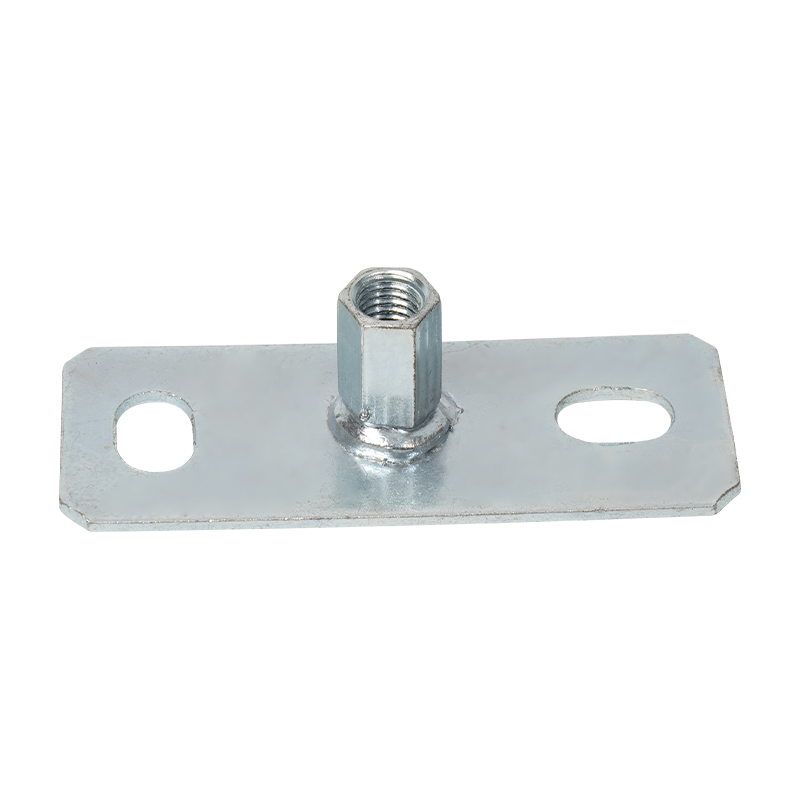
A mounting plate is a flat structural component used to fix, support, and position equipment, components, or assemblies onto a surface or within a structure. It acts as an interface layer between the item being mounted and the mounting surface — distributing load, ensuring alignment, and providing a stable foundation that keeps the mounted component secure during operation. Mounting plates are used across machinery, electronics, construction, automation, and instrumentation — wherever reliable, precise, and durable equipment attachment is required.
While the physical form of a mounting plate is simple, it serves several distinct engineering functions simultaneously:
The material selected for a mounting plate determines its suitability for the operating environment, load capacity, and temperature range:
Steel mounting plates offer the highest load capacity and are the standard choice for heavy machinery, structural applications, and industrial equipment. Stainless steel plates (typically 304 or 316 grade) are used where corrosion resistance is required — including food processing, marine environments, chemical plants, and high-temperature installations. Stainless steel maintains structural integrity at temperatures up to approximately 870°C (Grade 304), making it appropriate for high-heat industrial environments where standard mild steel would oxidize or weaken.
Aluminum mounting plates are widely used in electronics enclosures, aerospace applications, and any situation where weight reduction is a priority. At approximately one-third the weight of steel, aluminum plates significantly reduce the overall mass of the mounted assembly without compromising rigidity at lower load levels. Anodized aluminum provides additional corrosion resistance for outdoor and humid indoor environments.
For cryogenic or extreme low-temperature applications (below -40°C), specialized alloy plates made from materials such as titanium or nickel alloys are specified — these maintain mechanical ductility at temperatures where standard steel becomes brittle. For high-temperature furnace or engine applications beyond the limits of stainless steel, heat-resistant nickel-chromium alloys are used.
In electronic equipment enclosures, mounting plates perform an important electromagnetic shielding function. A metallic plate mounted inside a cabinet creates a conductive barrier that contains electromagnetic emissions from the mounted components and prevents external interference from reaching sensitive electronics. This is particularly critical in:
Many mounting plates feature slotted holes rather than round holes, allowing lateral or vertical adjustment within a defined range after initial installation. This flexibility is particularly valuable when mounting sensors, cameras, or instruments that must be precisely aimed or aligned — minor position corrections can be made by loosening the fasteners and sliding the plate rather than drilling new holes or replacing the mounting hardware.
Mounting plates are produced in standardized specifications to ensure compatibility across equipment from different manufacturers. Common thread specifications for mounting holes include M10, M12, M18, and M20 — with the choice of thread size determined by the fastener load requirements and the thickness of the plate material. Larger thread sizes (M18, M20) are used for heavy-load structural mounting applications, while M10 and M12 are standard for most general-purpose equipment and panel mounting uses.
| Industry | Typical Use | Common Material |
|---|---|---|
| Electronics and IT | DIN rail panels, PCB support, EMC shielding | Steel, aluminum |
| Industrial machinery | Motor and gearbox mounting, sensor brackets | Mild steel, stainless steel |
| Construction and civil | Structural brackets, facade anchor plates | Galvanized steel, stainless steel |
| Automotive | Engine component mounting, control unit brackets | Aluminum alloy, steel |
| Solar and renewable energy | Panel frame mounting, inverter wall plates | Anodized aluminum, stainless steel |
| Medical equipment | Device bracket, equipment wall mounting | 316 stainless steel, aluminum |
Selecting the correct mounting plate for an application requires matching several specifications to the operating requirements:
Recommended Products
 General Manager Mr.Song +86-18868665013 / Miss Zhou +86-13757458992
 International Sales Manager: Jim Yao +86-18968349877
 +86-574-62939789
 Wechat/WhatsApp: +86-18968349877
 [email protected]; [email protected]
 No. 147 Dushan, Sanqi Town, Yuyao City, Zhejiang Province
Copyright © Ningbo Heqi Pipe Co., Ltd. All rights reserved. Wholesale Drainage Pipes Manufacturer Drainage Fittings Supplier



 EN
EN

 English
 中文简体
中文简体