 2026.07.10
 Industry News
Content
PE hot melt pipe fittings are connection components made from polyethylene (PE) material that are joined to pipes using thermal fusion, commonly called hot melting or heat fusion. The process heats both the fitting socket or end face and the pipe end to a specific temperature until the surfaces melt, then presses them together to form a permanent, leak-proof molecular bond as the material cools. The result is a joint that is as strong as, or stronger than, the pipe wall itself.
Unlike mechanical fittings that rely on threads, clamps, or rubber gaskets, PE hot melt fittings create a homogeneous connection with no separate sealing element that can age or fail. This makes them the standard choice for pressurized water supply, natural gas distribution, irrigation networks, and industrial fluid transport systems worldwide.
Not all PE is the same. The grade of polyethylene directly determines the pressure rating, temperature tolerance, and long-term performance of the fitting. The industry currently uses three main grades:
| Grade | Density (g/cm3) | MRS Rating | Typical Application |
| PE 63 | 0.930 to 0.944 | 6.3 MPa | Low pressure irrigation, drainage |
| PE 80 | 0.926 to 0.940 | 8.0 MPa | Water supply, gas lines below DN 110 |
| PE 100 | 0.941 to 0.965 | 10.0 MPa | High pressure water, gas, industrial |
Source: ISO 4427-1:2019, Plastics Piping Systems for Water Supply and Drainage.
PE 100 is the current industry benchmark for pressure pipe fittings. Its higher minimum required strength (MRS) allows thinner wall sections for the same pressure rating compared to PE 80, reducing material weight and cost without compromising performance. Most modern infrastructure projects specify PE 100 as the minimum acceptable grade.
A further development called PE 100-RC (Resistance to Crack) has been introduced for applications where fittings are installed in direct soil contact without sand bedding, or where point loads cannot be avoided. PE 100-RC materials demonstrate over 8,760 hours of resistance in the notch pipe test (NPT) at 80 degrees Celsius, compared to just 165 hours for standard PE 100 (source: Frank et al., "PE 100-RC," 3S Consult Technical Report, 2007). This grade is increasingly specified in trenchless installation methods such as pipe bursting and horizontal directional drilling.
PE hot melt pipe fittings are joined using one of two fundamental fusion techniques. Choosing the correct method depends on pipe diameter, system pressure, installation space, and project specifications.
Butt fusion is used for larger diameter pipes, typically DN 63mm and above. Both the pipe end and the flat face of the fitting are simultaneously heated against a flat heating plate to the required temperature (typically 200 to 230 degrees Celsius for PE 100, per ISO 21307). The plate is then removed, and the two molten surfaces are pressed together under controlled pressure until the weld cools.
Key process parameters for butt fusion (source: ISO 21307:2017, Plastics Pipes and Fittings, Butt Fusion Jointing Procedure):
A correctly executed butt fusion joint produces a symmetrical double bead of extruded material around the full pipe circumference, confirming even heat distribution and adequate fusion pressure.
Socket fusion is used for smaller diameter systems, typically DN 20mm to DN 63mm. A heated mandrel (pin) and socket tool simultaneously heat the outside of the pipe end and the inside of the fitting socket. When both surfaces reach melt temperature, the tool is removed and the pipe is pushed into the fitting socket by hand to a pre-marked depth, then held still while the joint cools.
Socket fusion is faster per joint and requires simpler tooling than butt fusion, making it highly practical for residential plumbing, small irrigation laterals, and compact industrial manifold assemblies.
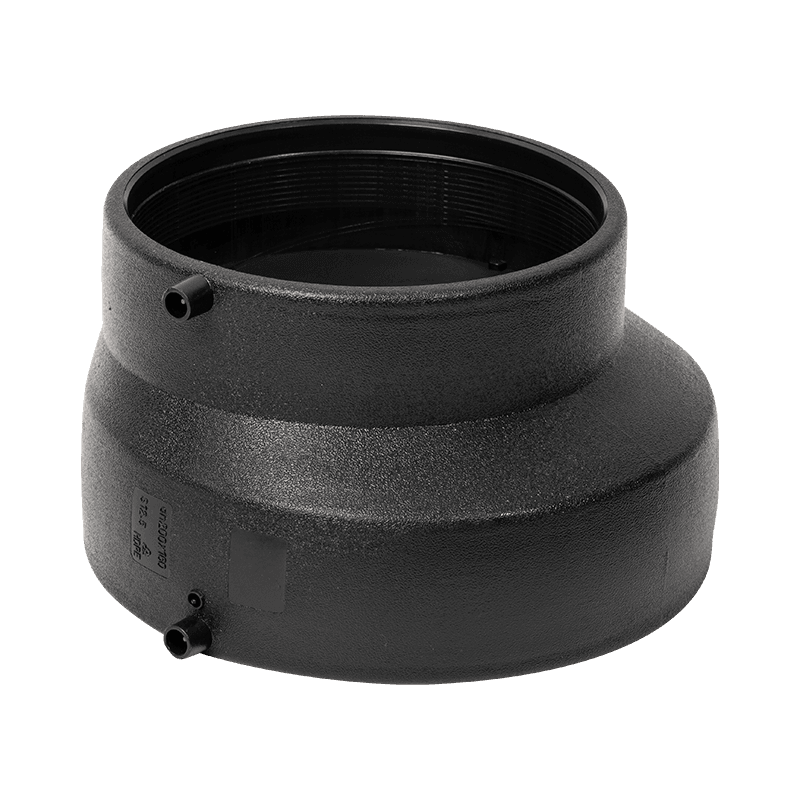
Electrofusion fittings contain embedded resistance wires. An electric controller passes current through the wires, generating heat internally to fuse the joint. While this is also a PE heat fusion method, it is a separate product category from standard hot melt fittings. Electrofusion is preferred for field repairs, connections in tight spaces, or joining pipes of slightly different wall thicknesses where alignment tools are impractical.
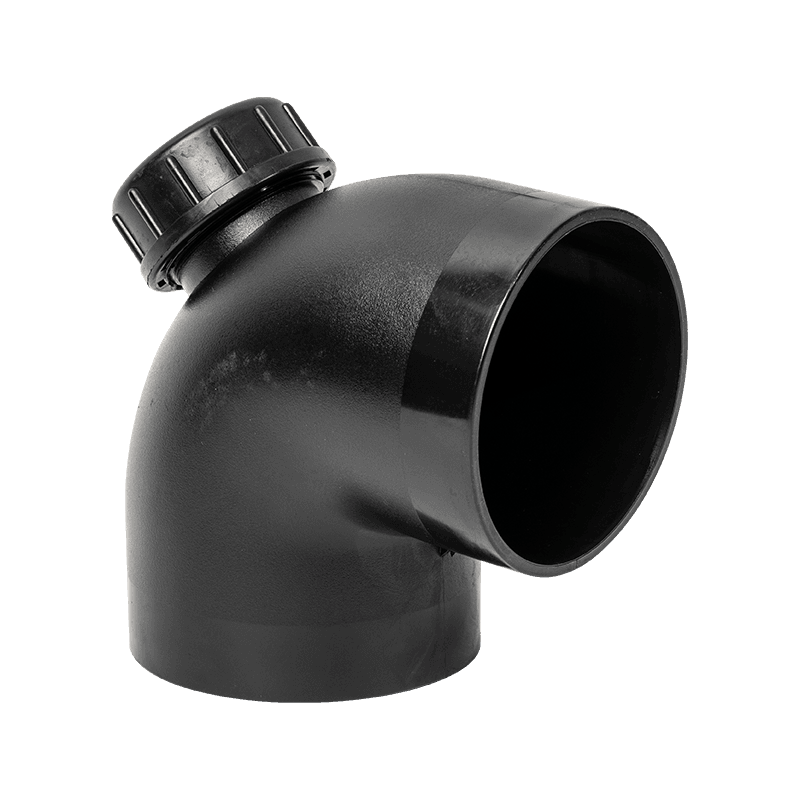
The range of available fitting geometries covers virtually every piping configuration required in modern infrastructure. Below is an overview of the most widely used types:
| Fitting Type | Function | Typical Sizes |
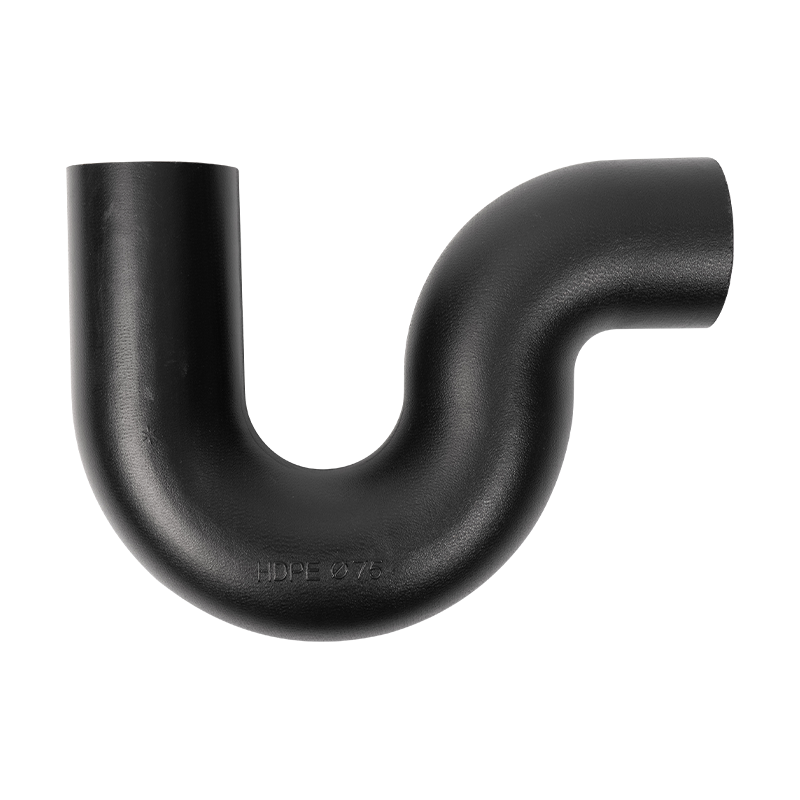
| Elbow (45 deg / 90 deg) | Change pipe direction | DN 20 to DN 630 |
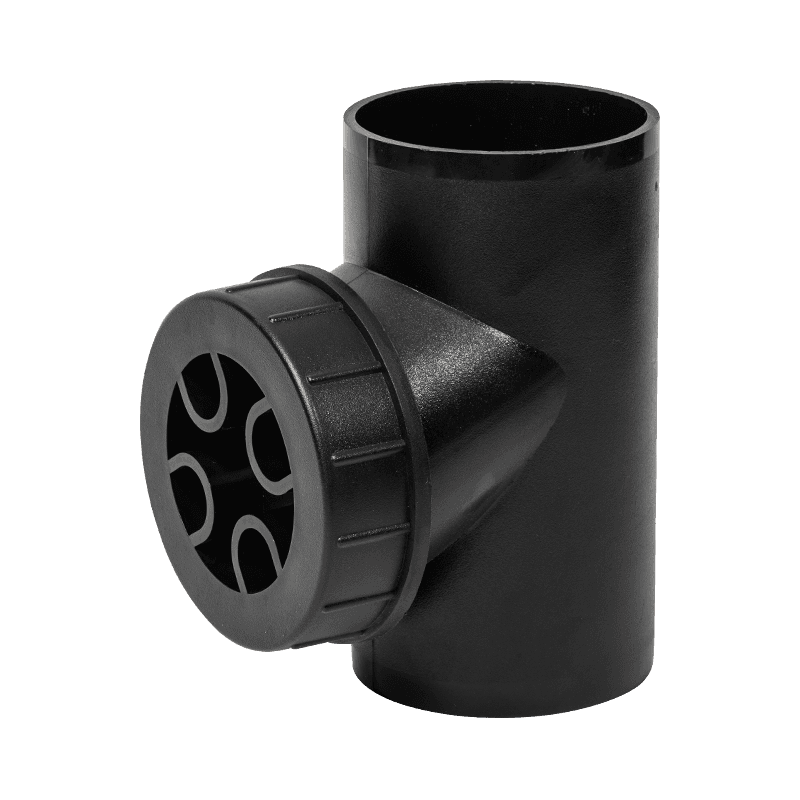
| Equal Tee | Create a branch at 90 degrees from the main run | DN 20 to DN 630 |
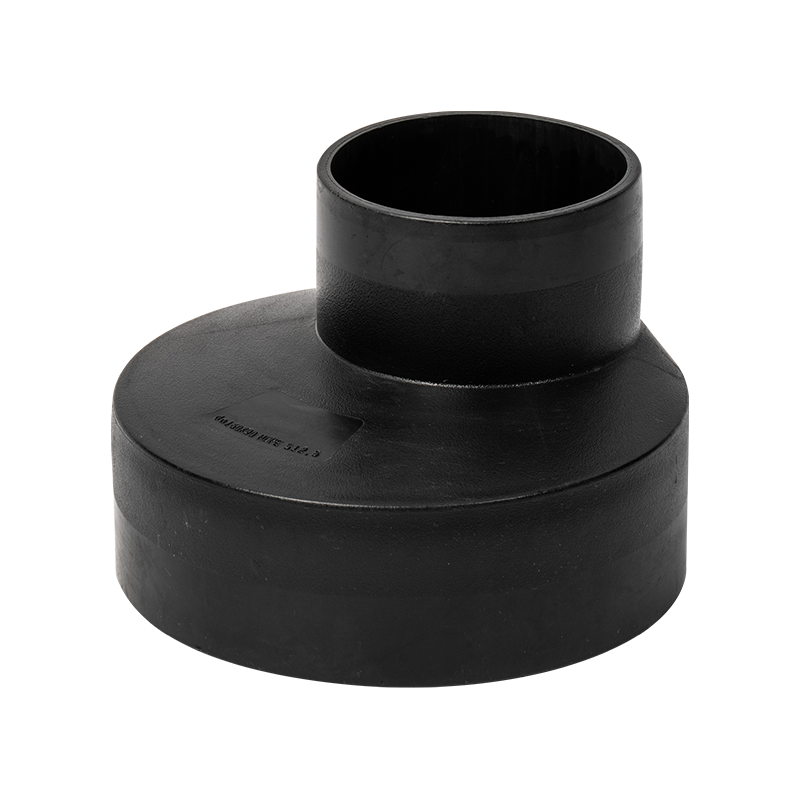
| Reducer / Reducing Tee | Connect pipes of different diameters | DN 20 to DN 630 |
| Coupling (Socket) | Join two pipe ends in a straight line | DN 20 to DN 250 |
| End Cap | Seal the end of a pipeline | DN 20 to DN 630 |
| Flange Adaptor | Connect PE pipeline to flanged metal valves or equipment | DN 20 to DN 630 |
| Stub End | Used with loose backing flanges for dismountable PE connections | DN 63 to DN 630 |
| Cross / Equal Cross | Four-way pipe branching | DN 20 to DN 315 |
For projects requiring a broad and standardized range, heqipipe.com offers a comprehensive PE hot melt pipe fittings series covering all standard SDR ratios and pressure classes, manufactured to ISO 4427 and GB/T 13663 specifications.
PE hot melt fittings are frequently compared against traditional materials such as ductile iron, PVC, and stainless steel. Each material has its domain, but PE offers a set of combined advantages that few alternatives can match for buried pressurized pipeline networks.
PE is chemically inert to the vast majority of soil types, groundwater chemistries, and common transported fluids. It does not rust, scale, or pit. A long-term cost study published by the Plastics Pipe Institute (PPI TR-3, 2015) found that PE pipe systems eliminated up to 97 percent of corrosion-related maintenance costs compared to equivalent metallic systems over a 50-year lifecycle in aggressive soil environments.
PE has a tensile elongation at break of 350 to 600 percent (source: ISO 6259-3), giving the pipeline system exceptional flexibility and the ability to absorb ground movement. Following the 1994 Northridge earthquake in California, post-event surveys documented that PE gas distribution pipelines suffered far fewer failures per kilometer than comparable metallic pipe networks in the same affected zones (source: American Gas Association, 1994 Earthquake Damage Assessment Report).
A correctly made butt fusion or socket fusion joint creates a continuous PE matrix with no mechanical interface, no gasket, and no sealant. Independent pull-out and pressure tests consistently show that properly fused joints fail in the pipe body rather than at the joint itself, confirming that the fusion zone is not the weak point of the system.
PE 100 pipe and fittings installed under standard conditions carry a rated service life of 50 years at 20 degrees Celsius and maximum rated pressure, verified through hydrostatic regression testing per ISO 9080. Many systems are now exceeding 40 years in service with no structural degradation observed.
When specifying or purchasing PE hot melt pipe fittings, compliance with recognized standards is a non-negotiable quality indicator. The most relevant international and regional standards are:
Fittings should carry visible product markings including material designation (e.g. PE 100), SDR ratio, pressure class (PN rating), nominal diameter, standard reference number, manufacturer identification, and production date code. The absence of any of these markings is a significant quality warning sign.
The Standard Dimension Ratio (SDR) is the ratio of the outside diameter to the wall thickness of a PE pipe or fitting. A lower SDR number means a thicker wall relative to the diameter, and therefore a higher pressure rating. The relationship is defined by the formula:
PN = 20 x MRS / (C x (SDR - 1))
Where PN is the nominal pressure rating in bar, MRS is the minimum required strength of the material, and C is the design coefficient (typically 1.25 for water, 2.0 for gas per ISO 4427 and ISO 8085 respectively).
The most commonly used SDR classes and their corresponding pressure ratings for PE 100 in water applications are:
| SDR Class | Wall Thickness Ratio | PN Rating (PE 100, Water) | Typical Use |
| SDR 11 | Thickest wall | PN 16 | High pressure mains, gas distribution |
| SDR 13.6 | Medium-thick wall | PN 12.5 | Municipal water networks |
| SDR 17 | Medium wall | PN 10 | General water distribution |
| SDR 21 | Thinner wall | PN 8 | Gravity flow, low pressure irrigation |
| SDR 26 | Thinnest wall | PN 6 | Drainage, non-pressure applications |
Source: ISO 4427-1:2019, Table 4. It is essential to match the SDR class of the fitting to the SDR class of the pipe being joined. Mismatching SDR classes leads to uneven wall thickness at the fusion zone, weakening the joint and invalidating pressure ratings.
The combination of corrosion resistance, pressure performance, and reliable fusion jointing makes PE hot melt fittings the dominant choice across multiple infrastructure sectors.
PE 100 fittings are now the default specification for new water mains in most developed markets. The World Health Organization (WHO) confirms that PE does not leach harmful substances into potable water under normal operating conditions, and the smooth internal bore maintains a Hazen-Williams roughness coefficient of C = 150, significantly reducing head loss compared to aging cast iron systems (source: WHO, "Polymeric Materials in Drinking Water," 2011).
PE 100 SDR 11 fittings are globally specified for underground gas distribution at pressures up to 10 bar in many national standards. Their impermeability to gas and resistance to soil-induced stress cracking make them far safer than older metallic alternatives in buried service.
Large-scale drip and sprinkler irrigation systems rely heavily on PE hot melt fittings for mainlines and sub-mains. The lightweight nature of PE fittings (approximately 8 times lighter than ductile iron of the same nominal diameter and pressure class) reduces both installation labor and transport costs significantly for remote agricultural sites.
Chemical processing, mining slurry transport, and power plant cooling water systems use PE hot melt fittings for their resistance to a wide range of aggressive chemicals. PE is resistant to most acids, alkalis, and salt solutions at ambient temperature, as documented in the Chemical Resistance Guide for Polyethylene published by the Plastics Pipe Institute.
PE 100 SDR 11 butt fusion fittings are the standard for ground loop piping in geothermal heat pump installations, where the buried piping must remain fully leak-free for system lifetimes exceeding 50 years with zero maintenance access.
The performance of a PE hot melt fitting system is only as reliable as the quality of the fittings themselves. When evaluating suppliers, the following indicators should be reviewed:
The PE hot melt pipe fittings series available at heqipipe.com is produced using virgin PE 100 raw material and manufactured in compliance with ISO 4427-3 and GB/T 13663 dimensional and performance requirements, offering traceable quality documentation for infrastructure and industrial procurement.
Even the highest quality PE hot melt fitting can produce a poor joint if installation procedures are not followed correctly. The following practices are critical to joint integrity:
PE hot melt pipe fittings represent a mature, well-documented, and globally trusted technology for pressurized pipeline systems. Their core value proposition rests on three pillars: material durability with a 50-year rated service life, joint integrity that exceeds pipe body strength, and chemical and corrosion immunity that eliminates maintenance-intensive failure modes common in metallic systems.
For engineers, contractors, and procurement teams specifying pipe fitting systems for water, gas, irrigation, or industrial applications, understanding the SDR class, PE material grade, fusion method, and applicable standard for each project segment is essential to delivering a system that performs reliably across its full design life.
Explore the full range of PE hot melt pipe fittings at heqipipe.com for detailed dimensional data, pressure ratings, and technical specifications across all standard sizes and SDR classes.
 General Manager Mr.Song +86-18868665013 / Miss Zhou +86-13757458992
 International Sales Manager: Jim Yao +86-18968349877
 +86-574-62939789
 Wechat/WhatsApp: +86-18968349877
 [email protected]; [email protected]
 No. 147 Dushan, Sanqi Town, Yuyao City, Zhejiang Province
Copyright © Ningbo Heqi Pipe Co., Ltd. All rights reserved. Wholesale Drainage Pipes Manufacturer Drainage Fittings Supplier



 EN
EN

 English
 中文简体
中文简体