Connecting PE hot melt pipe fittings involves applying controlled heat to fuse polyethylene surfaces together, creating a joint that is as strong as — or stronger than — the pipe itself. The three primary methods are butt fusion (hot melt butt welding), socket fusion (hot melt socket welding), and electrofusion (electric hot melt). Each method suits different pipe sizes, installation environments, and application requirements. When performed correctly with the right tools and temperature settings, hot melt connections require no adhesives, solvents, or additional sealing materials, making them one of the most reliable jointing systems available for modern pipeline projects.
What Are PE Hot Melt Pipe Fittings?
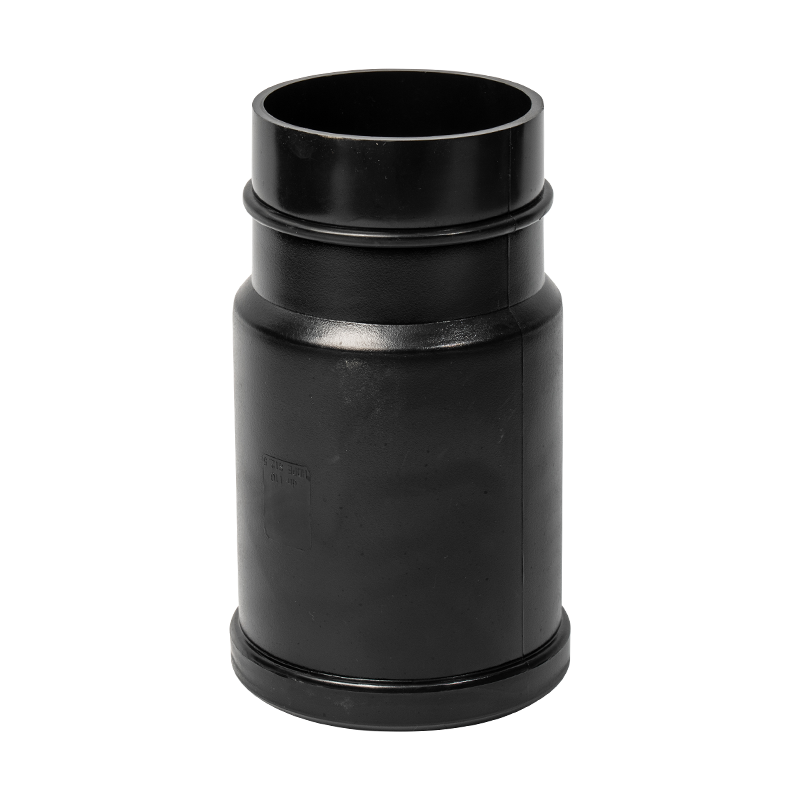
PE hot melt pipe fittings are polyethylene fittings designed to be joined to pipes and other fittings through thermal fusion. The material — typically PE80 or PE100 grade high-density polyethylene (HDPE) — softens when heated to its fusion temperature range of approximately 200°C to 230°C (392°F to 446°F) and bonds permanently when the softened surfaces are pressed together and allowed to cool under controlled pressure.
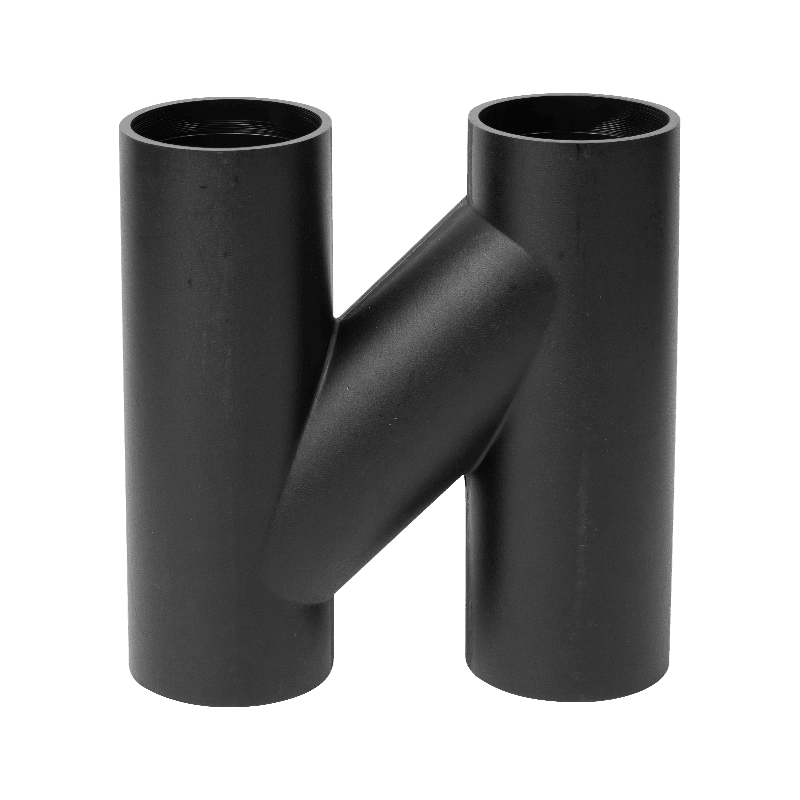
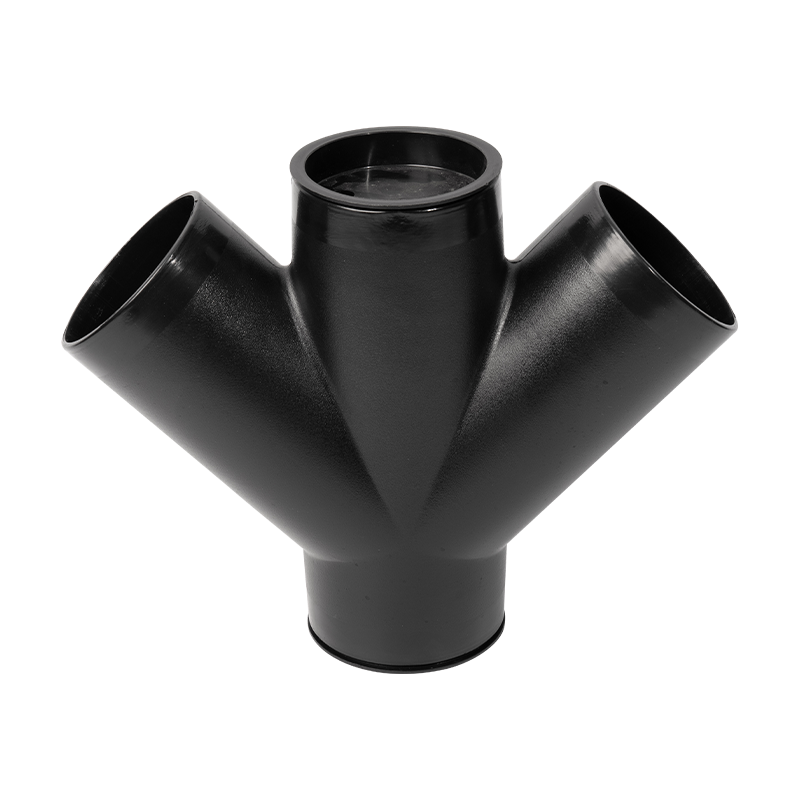
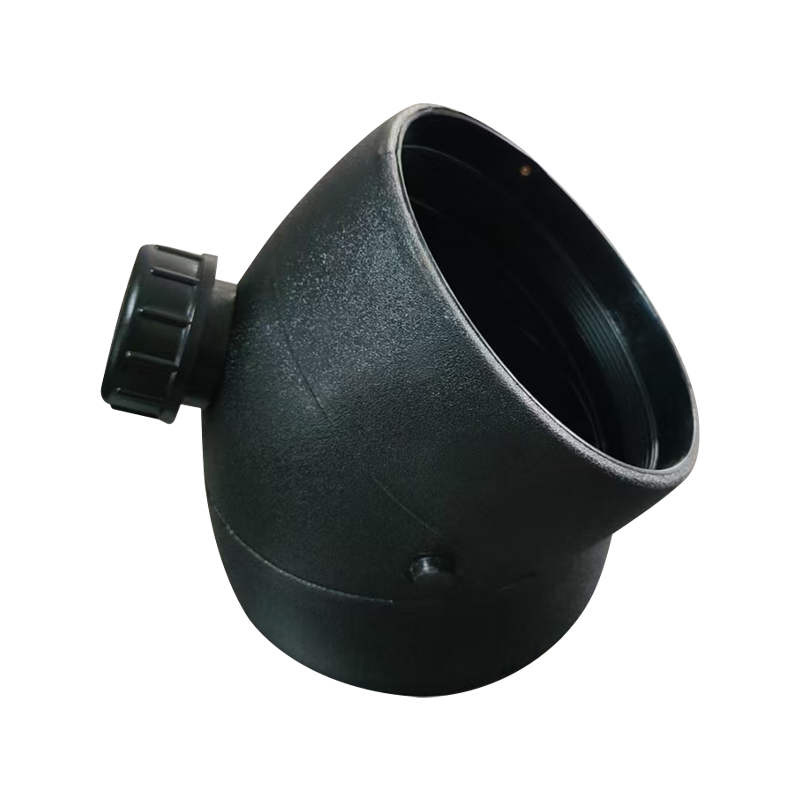
These fittings are available in a comprehensive range of types to accommodate virtually any pipeline configuration:
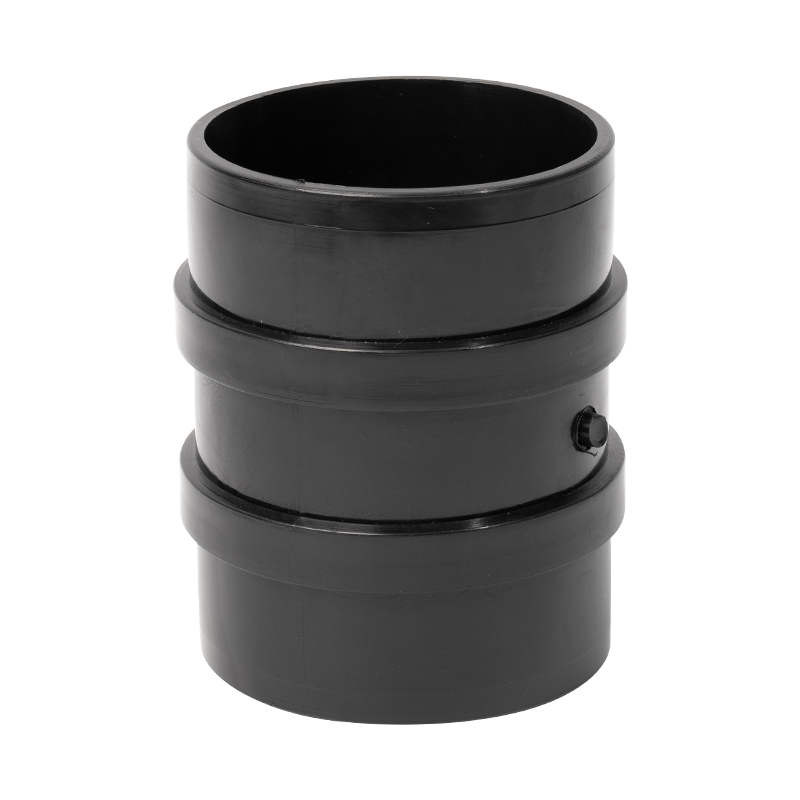
- Straight couplings: Connect two pipes of the same diameter in a straight line.
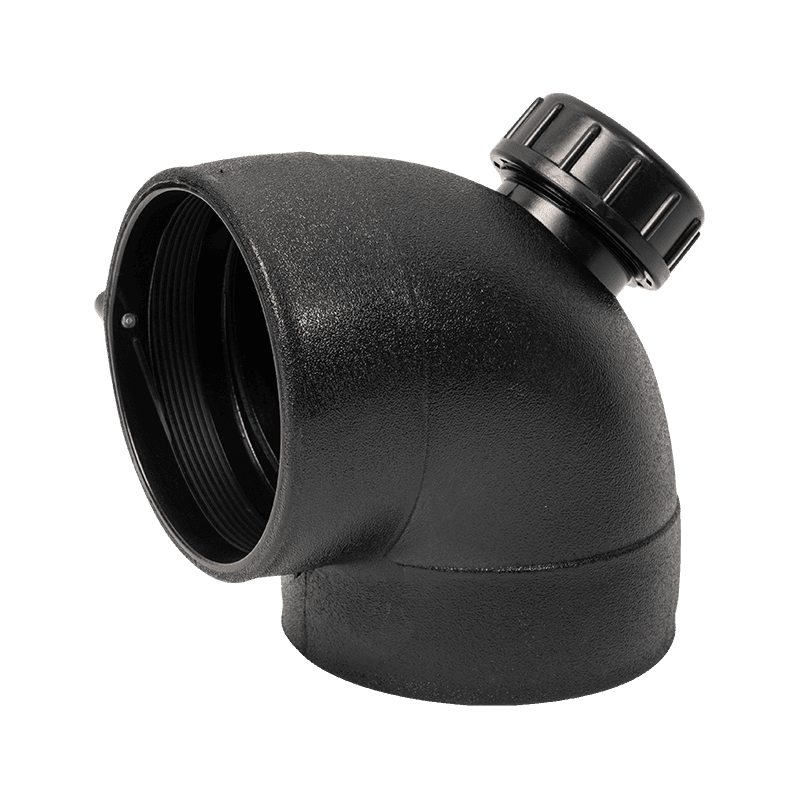
- Elbows (45° and 90°): Change the direction of flow in the pipeline.
- Tees and equal tees: Create branch connections from a main pipeline run.
- Reducers: Transition between two different pipe diameters.
- End caps: Seal the terminal end of a pipeline.
- Flanges and stub ends: Allow connections to metal valves, pumps, or equipment.
The fitting series is widely used in municipal water supply, gas transmission, industrial drainage, agricultural irrigation, and residential plumbing — anywhere a leak-free, long-lasting, corrosion-resistant pipeline is needed.
The Three Core Connection Methods Explained
Choosing the correct fusion method depends on pipe diameter, fitting type, available equipment, and site conditions. Here is a detailed breakdown of each approach.
Method 1: Butt Fusion (Hot Melt Butt Welding)
Butt fusion is the standard method for joining pipes and fittings with an outer diameter of 63 mm and above. It uses a hydraulic or manual butt fusion machine with a flat heating plate. The process melts the pipe ends face-to-face and then presses them together under controlled force to form a monolithic joint with a characteristic bead on both the inside and outside of the weld.
Step-by-step butt fusion procedure:
- Prepare the equipment: Clamp both pipe ends securely into the butt fusion machine. Ensure the pipe ends are aligned and the machine jaws are clean.
- Face the pipe ends: Use the facing tool (trimmer) to shave both pipe ends until they are perfectly flat, parallel, and free of contamination. Facing is complete when continuous shavings are produced from both ends simultaneously.
- Check alignment and gap: Close the machine to bring the faced ends together without the heater plate. The misalignment between the two ends should be no more than 10% of the pipe wall thickness, and any gap should not exceed 0.5 mm. If alignment is off, reface and re-check.
- Heat the heater plate: Set the heater plate temperature to the manufacturer's recommended value — typically 210°C ± 10°C (410°F ± 18°F) for HDPE PE100. Verify the surface temperature with a calibrated pyrometer before proceeding.
- Heating (bead-up) phase: Insert the heater plate between the pipe ends and apply the specified drag pressure until a uniform melt bead of the correct height forms on both ends. Bead height is typically 0.5 mm to 3 mm depending on pipe wall thickness.
- Heat soak phase: Reduce pressure to near zero (just enough to maintain contact) and allow the heat to soak into the pipe wall for the required duration. Heating time is approximately 10 seconds per millimeter of pipe wall thickness.
- Plate removal: Separate the pipe ends, remove the heater plate quickly (within the maximum change-over time, typically 5 to 10 seconds depending on pipe size), and bring the molten ends together immediately.
- Fusion (joining) phase: Apply the specified fusion pressure smoothly and hold it throughout the entire cooling cycle. The fusion pressure is calculated from the pipe cross-sectional area and typically ranges from 0.15 MPa to 0.20 MPa.
- Cooling under pressure: Maintain fusion pressure without disturbing the joint until it has cooled completely. Minimum cooling time is approximately 10 minutes per 10 mm of pipe wall thickness, but never less than the time specified in the welding procedure.
- Inspect the joint: Release the clamps and inspect the weld bead. A good butt fusion joint has a uniform, symmetrical, rolled-back bead of consistent height around the full circumference on both sides of the joint. No voids, flat spots, or significantly uneven beads should be present.
Method 2: Socket Fusion (Hot Melt Socket Welding)
Socket fusion is the preferred method for smaller diameter pipes, typically 20 mm to 63 mm. It is widely used for residential and light commercial plumbing where the pipeline layout is more complex and involves many direction changes. Socket-type fittings — including straight couplings, elbows, tees, and reducers — are heated simultaneously on a dual-faced heating tool called a spigot/socket heater or fusion iron.
Step-by-step socket fusion procedure:
- Mark the insertion depth: Using a depth gauge or ruler, mark the pipe at the correct insertion depth on the pipe's outer surface. This ensures the pipe is fully inserted into the fitting socket without bottoming out during fusion.
- Prepare surfaces: Clean both the pipe end (spigot) and the fitting socket with a clean, lint-free cloth. Remove any burrs from the pipe end with a chamfering tool. Surface cleanliness is critical — contamination with oil, moisture, or dirt will compromise the weld.
- Heat the fusion tool: Attach the appropriately sized spigot mandrel and socket cup to the dual-faced heating iron. Heat to 260°C ± 10°C (500°F ± 18°F) — slightly higher than butt fusion due to the shorter heating contact area.
- Simultaneous heating: Push the pipe end onto the spigot mandrel and the fitting socket onto the socket cup at the same time. Apply gentle, even pressure and hold for the recommended heating time — typically 5 to 30 seconds depending on pipe diameter (e.g., 5 seconds for 20 mm, 30 seconds for 63 mm).
- Remove from heater: Withdraw the pipe and fitting from the heater tool simultaneously with a straight pull. Do not twist or rotate.
- Join immediately: Push the pipe straight into the fitting socket in one smooth, continuous motion up to the insertion depth mark. The change-over and joining time must be completed within 4 to 6 seconds for small diameters — speed is critical.
- Hold and cool: Hold the joint firmly in alignment without movement for at least 30 seconds (longer for larger diameters), then allow to cool undisturbed for a minimum of 2 to 3 minutes before handling. Do not apply water cooling.
- Inspect: A correctly made socket fusion joint will show a small, uniform bead of melted PE around the entire socket entrance. Absence of this bead or an irregular bead indicates insufficient heat or improper insertion.
Method 3: Electrofusion (Electric Hot Melt)
Electrofusion uses fittings with embedded electrical resistance wires. When connected to an electrofusion controller and powered, the wires heat the inner surface of the fitting and the outer surface of the pipe simultaneously, melting the material at the interface to create a fusion bond. This method is particularly valuable for repair work, connections in confined spaces, saddle tapping on live mains, and situations where alignment equipment cannot be set up.
Step-by-step electrofusion procedure:
- Prepare the pipe surface: Scrape the pipe surface in the fusion zone with a mechanical scraper tool to remove the oxidized outer layer. Remove at least 0.1 mm to 0.3 mm of surface material — this step is essential and must not be skipped, as the oxidized surface will prevent bonding.
- Clean the scraped zone: Wipe the scraped area and the inside of the fitting with a clean cloth dampened with isopropyl alcohol or a dedicated PE cleaner. Allow to dry completely (minimum 2 to 3 minutes) before proceeding.
- Mark and assemble: Mark the centreline of the fitting on the pipe. Slide the electrofusion fitting onto the pipe until it is centered at the correct position. Use alignment clamps to hold the pipe and fitting in position and prevent any movement during welding and cooling.
- Connect the controller: Attach the leads of the electrofusion controller to the fitting terminals. Most modern controllers read the fitting's barcode or data chip to automatically set the correct fusion voltage and time — typically between 8V and 48V for a duration of 30 seconds to several minutes depending on fitting size.
- Initiate fusion: Start the fusion cycle. The controller will apply the precise electrical current to heat the resistance wires. Indicator pins on most quality fittings will rise visibly when correct fusion pressure has been achieved inside the fitting.
- Cool under restraint: After the controller signals completion, do NOT remove the clamps or disturb the joint until the full cooling time displayed on the fitting or controller has elapsed. Cooling times range from 5 minutes to over 30 minutes for large-diameter electrofusion couplers.
- Record and inspect: Log the weld data (often printed automatically by the controller). Visually confirm the indicator pins have emerged correctly and that no signs of overheating or leakage are present.
Comparison of the Three Fusion Methods
The table below summarizes the key characteristics and best-use scenarios for each connection method to help you choose the right approach for your project.
| Feature |
Butt Fusion |
Socket Fusion |
Electrofusion |
| Applicable Diameter |
63 mm and above |
20 mm – 63 mm |
20 mm – 1200 mm+ |
| Equipment Required |
Butt fusion machine, heater plate |
Socket fusion iron, depth gauge |
Electrofusion controller, clamps |
| Skill Level |
Moderate to high |
Low to moderate |
Low (controller-guided) |
| Joint Strength |
Very high |
High |
Very high |
| Best for Confined Spaces |
No |
Limited |
Yes |
| Typical Use Cases |
Municipal mains, gas pipelines |
Home plumbing, irrigation |
Repairs, tapping, upgrades |
| Sealing Materials Needed |
None |
None |
None |
Table 1: Comparison of butt fusion, socket fusion, and electrofusion connection methods for PE hot melt pipe fittings
Critical Pre-Connection Preparations
Regardless of which fusion method you use, thorough preparation before welding is the single biggest determinant of joint quality. Skipping or rushing these steps is the most common cause of field joint failures.
Material Verification
Always confirm that the pipe and fitting are made from compatible PE material grades (e.g., both PE100 or both PE80). Attempting to fuse PE100 pipe to a PE80 fitting — or mixing materials from incompatible sources — can result in a joint with reduced strength even if the visual appearance is acceptable.
Surface Cleanliness
Contamination is the number one cause of failed hot melt joints. Before any fusion operation:
- Wipe all fusion surfaces with a clean, dry, lint-free cloth.
- Do not use oily rags or cloths that have been used to clean machinery.
- For electrofusion, clean with isopropyl alcohol after scraping and allow to dry fully.
- Keep pipe ends covered until immediately before fusion to prevent dust and moisture ingress.
Tool Temperature Verification
Always verify heater plate or fusion iron temperature with a calibrated surface thermometer or pyrometer at the start of every working session and after any significant delay. A plate that reads the correct temperature on its dial but has a cold spot due to a faulty element can produce visually acceptable but structurally weak welds. Allow a minimum warm-up time of 20 to 30 minutes for most fusion equipment.
Environmental Conditions
Hot melt connections should be made under shelter whenever possible. Key environmental guidelines include:
- Ambient temperature: Fusion should ideally be performed between 5°C and 40°C (41°F to 104°F). In colder conditions, pipe ends must be preheated; in extreme heat, cooling times must be extended.
- Wind: Shield the work area from wind, which accelerates surface cooling of the molten PE and can cause premature solidification before proper fusion occurs.
- Rain and moisture: Never perform fusion on wet surfaces or in rain. Moisture causes steam entrapment in the weld, leading to voids and joint failure under pressure.
Key Fusion Parameters and Why They Matter
Successful PE hot melt connections depend on controlling four interdependent parameters: temperature, time, pressure, and change-over speed. Deviation in any one parameter affects all the others and can compromise joint integrity.
| Parameter |
Typical Value (Butt Fusion) |
Effect of Deviation |
| Heater Plate Temperature |
210°C ± 10°C |
Too low: insufficient melt; Too high: material degradation |
| Heating Time |
~10 sec per mm wall thickness |
Too short: cold weld; Too long: oxidation of melt |
| Change-over Time |
Max 5–10 seconds |
Too long: surface cools, poor fusion bond |
| Fusion Pressure |
0.15–0.20 MPa |
Too low: incomplete bonding; Too high: melt squeezed out |
| Cooling Time |
Min 10 min per 10 mm wall |
Too short: joint distorts under load |
Table 2: Key butt fusion parameters and consequences of deviation for PE hot melt pipe connections
Connecting Socket-Type PE Fittings: Elbows, Tees, and Couplings
Socket-type fittings are the backbone of smaller-diameter PE piping systems. Their flexible connection method makes them easy to install in complex pipeline layouts involving multiple direction changes or branch lines. When using socket-type elbows (45° or 90°), tees, and straight couplings, the key points are:
- Always heat both components simultaneously — the pipe end on the spigot mandrel and the fitting socket on the cup — to ensure both mating surfaces reach the correct melt depth at the same moment.
- Plan the joint orientation before heating. Once the molten socket is pushed onto the pipe, you have only about 2 to 3 seconds to make minor angular corrections. After that, the material begins to solidify and any rotation will destroy the joint.
- Use depth marks. Inserting the pipe to the correct socket depth ensures that the full fusion zone is engaged. Under-insertion leaves a gap in the bond area that can fail under pressure or mechanical stress.
- For tee fittings, all three ports must ultimately be fused. Work in a logical sequence and ensure each previously made joint has cooled sufficiently before handling the fitting to make the next joint.
- Keep the heating tool clean. PE residue left on the spigot mandrel or socket cup from previous joints will contaminate the melt surface of the next joint. Wipe the tool with a clean cloth while still hot after each weld.
Post-Connection Inspection and Testing
Visual inspection immediately after welding and formal pressure testing before commissioning are both essential quality assurance steps.
Visual Inspection Criteria
- Butt fusion: Bead should be uniform, symmetrical, and rolled back fully around the pipe circumference on both sides of the joint. Bead should not be excessively large (over-heated) or absent on any section (under-heated or contaminated).
- Socket fusion: A small uniform ring of melted PE should appear at the socket entrance. The pipe end should not be visible inside the fitting beyond the socket depth.
- Electrofusion: Indicator pins (where fitted) should protrude by the specified distance. No signs of burning, charring, or fitting distortion should be present.
Hydrostatic Pressure Testing
Before backfilling a buried pipeline or commissioning a pressurized system, conduct a hydrostatic pressure test. For water supply applications, the test pressure is typically 1.5 times the system's maximum operating pressure (MOP), held for a minimum duration of 1 hour without any measurable pressure drop. For gas pipelines, follow the relevant national standard (e.g., ISO 4437 or local regulatory requirements) for test medium, pressure, and hold time.
Common Mistakes to Avoid When Connecting PE Hot Melt Fittings
Even experienced installers can make errors that reduce joint quality. Being aware of the most frequent mistakes helps prevent costly rework or field failures:
- Skipping the scraping step in electrofusion: The oxidized PE surface simply will not bond. This is the most common cause of electrofusion joint failure in the field.
- Touching fusion surfaces with bare hands: Skin oils contaminate the melt zone. Always handle fusion areas with clean gloves or avoid touching them altogether after cleaning.
- Working in wind without shelter: A breeze as gentle as 3 m/s can cool a molten PE surface significantly during the change-over phase, producing a cold weld that looks acceptable but will fail prematurely.
- Cooling joints with water: Water-quenching a hot melt joint causes rapid, uneven cooling that introduces residual stress and can result in cracking. Always allow natural air cooling.
- Applying mismatched pressure in butt fusion: Using incorrect drag or fusion pressure — often because of an uncalibrated fusion machine — results in either a weak joint (under-pressure) or excessive melt extrusion that reduces wall thickness at the joint (over-pressure).
- Moving the joint before it has cooled: Disturbing the joint during the cooling phase disrupts the crystalline structure forming in the weld zone, permanently reducing its strength.
- Using worn or damaged heating tools: A scratched or non-stick-coated heater plate with worn coating can cause PE to stick to the plate, tearing the melt surface when the plate is removed. Inspect tool coatings regularly.
Applications of PE Hot Melt Pipe Fitting Connections
The reliable, leak-free joints achieved through hot melt connection technology make PE fittings the first choice across a wide range of demanding industries and applications:
Municipal Water Supply Systems
PE hot melt connections are the standard for urban water distribution networks. The fusion joints have no mechanical parts to corrode, no rubber seals to degrade, and offer pressure ratings up to PN25 (25 bar / 363 psi) for PE100 pipe — more than adequate for municipal main supply pressures. The monolithic joint also withstands ground movement and seismic activity far better than rigid mechanical joints.
Gas Transmission Pipelines
For buried gas distribution networks, hot melt connections — particularly electrofusion and butt fusion — provide the gas-tight joints required by safety regulations. PE pipelines for gas are required to meet stringent standards including ISO 4437 and equivalent national codes. The absence of any gasket or mechanical seal eliminates potential leak points over the pipeline's design life of 50 years or more.
Industrial Water and Drainage Systems
In industrial environments handling aggressive chemicals, cooling water, or process effluent, PE hot melt fittings resist corrosion from most acids, alkalis, and solvents that would attack metal pipelines. Socket fusion connections are particularly useful in industrial plants where pipelines change direction frequently and space between equipment is limited.
Agricultural Irrigation Systems
PE hot melt socket fittings are widely used in farmland drip and sprinkler irrigation networks. Their UV resistance, flexibility, and corrosion resistance allow installation in exposed outdoor environments where metal or rigid plastic fittings would degrade rapidly. The ease of socket fusion means that irrigation installers can make many connections quickly in the field with minimal equipment.
Residential and Commercial Plumbing
In home and commercial building plumbing for hot and cold water supply, PE hot melt socket fittings offer a clean, fast alternative to threaded or solvent-cement plastic systems. The connections are permanent, hygienic, and require no ongoing maintenance — advantages that make them a preferred choice in modern construction projects.
About Ningbo Heqi Pipe Co., Ltd.
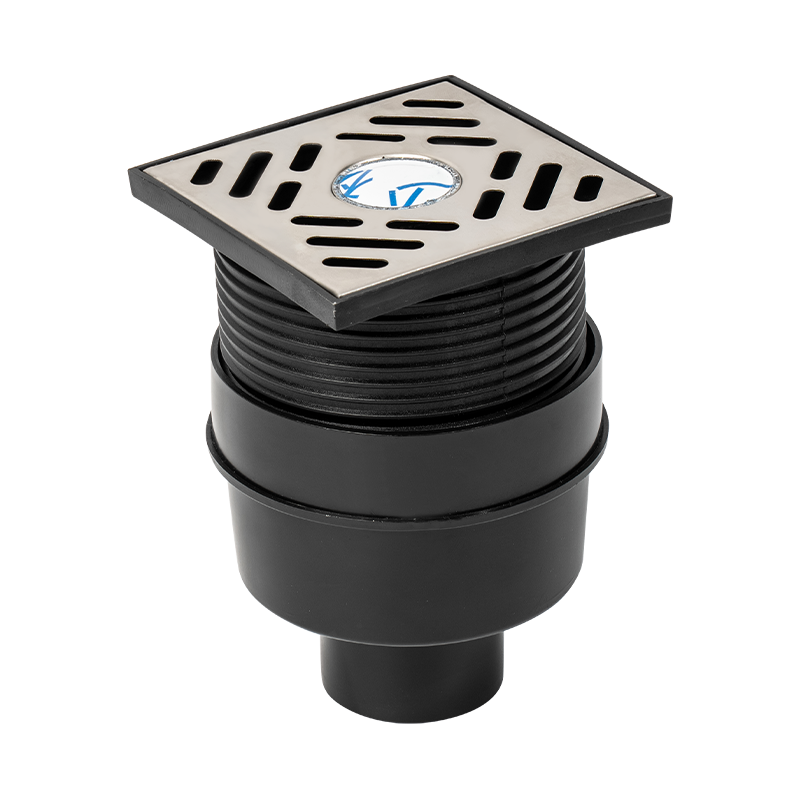
Ningbo Heqi Pipe Co., Ltd. is an HDPE Butt Fusion Coupler Factory and HDPE Socket Fusion Coupling Manufacturer located in Sanqi City. The company mainly produces four series of pipe fittings with complete specifications and varieties, including PE floor fittings, siphon drain pipe parts, PE socket hot melt fittings, butt hot melt fittings, and electric hot melt fittings. All products have been tested and certified by the National Chemical Building Materials Testing Center, and the company operates based on CJ/T250-2007 standards with a focus on professional management.
With comprehensive in-house production across all three major hot melt connection types — socket fusion, butt fusion, and electrofusion — Ningbo Heqi Pipe provides contractors, engineers, and distributors with a single, reliable source for the full range of PE hot melt pipeline components needed for water supply, drainage, gas, industrial, and agricultural piping systems.

 2026.06.05
 Industry News
 General Manager Mr.Song +86-18868665013 / Miss Zhou +86-13757458992
 International Sales Manager: Jim Yao +86-18968349877
 +86-574-62939789
 Wechat/WhatsApp: +86-18968349877
 [email protected]; [email protected]
 No. 147 Dushan, Sanqi Town, Yuyao City, Zhejiang Province


 EN
EN

 English
 中文简体
中文简体